6 May 2010

Far from France


It’s been a long time between posts! And while it’s not an excuse, the reality is that I have been on the move a bit lately ……


I initially had a week in Australia visiting my son before he heads off to Brisbane to live. And was fortunate enough to depart Europe 24 hours before the ash cloud closed down the airports!

I was so lucky – had I been caught up in that, I would have missed the trip to Borneo that I have just returned from. We (me and an old friend Sylvia, from Perth) have been planning this for a long time and it was all booked up and paid for, so it would have been a real shame.

As it was, we were luckier than a lot of unfortunate people whose plans have been ruined …. So I count myself very lucky in that respect.


Being back in Australia was lovely – catching up with family and friends. The first weekend there was a lot happening – the Red Bull Races were being held on the Swan River, so managed to get down for a bit of a look at that.

The day before, on a practice run, a Brazilian flyer had crashed into the water, miraculously surviving without injury, and only being kept in hospital overnight for observation.


And the Sunday, Paul was motorbike racing out at Barbargello race track at Wanneroo, so went out to lend my support there. Heart in mouth the whole time, but as Paul says, at least it’s all in a controlled environment, and if you’re going to come off a motorbike at high speed, there’s the place to do it.

And we did see an accident - one of the guys spun out on the corner at great speed and walked away from it without injury. And that was all before Paul’s race!


Borneo is a fascinating country – we visited the northern part of Sabah (Malaysian Borneo) and spent half the time in the east, in Sandakan and three days at a Rainforest Lodge doing river trips up and down the Kinabatangan River and a jungle walk.

We visited the Sepilok Orang-utan Rehabilitation Centre which is dedicated to the rescue and rehabilitation of orphaned baby orang-utans. Sadly, their natural rainforest habitat has decreased over the years due to the huge increase of palm oil plantations – though there are reserves that have been set aside.

Unfortunately my camera had somehow reverted to a very basic setting and the photos and video clip I took are all very low resolution. A real shame, because I got a great video of a baby orang utan that had apparently made a break from its keeper and ended up in a seating area near the entrance of the reserve. I’m including the video clip anyway as it’s amusing. He swung around the rafters for a while, and then pulled down one of the hanging pot plants onto the table, and then proceeded to try to clean it up, wiping all the spilled dirt off the table! Like a naughty child … the expression was priceless. And then his keeper came and took him away – and the chastened look on his face had to be seen! Sadly at that stage I’d stopped the video ….


We saw lots of wildlife on our early morning and early evening boat trips up and down the river – the bizarre-looking proboscis monkeys (only found in Borneo), several other monkey varieties, monitor lizards, a couple of large crocodiles - one was five metres – (but no photos – too quick into the water), and countless bird varieties, including the large hornbills. A twitcher’s paradise, and while I’m not one, it was really fascinating. No wild elephants or wild orang utangs, although we saw several of their sleeping nests they build in the trees.

There was a two hour rain forest walk, and this is where we had to wear leech socks and yellow gum boots – a picture of sartorial elegance. I came through it leech-free, Sylvia picked up two and a third was cut off at the pass crawling up her boot! There’s just something about leeches ………

A day in Sandakan town, and a trip out to the Australian War Memorial. By being in the rainforest for a few days, we’d missed the Anzac Day (25th April) dawn service there. I hadn’t realised when I was booking the trip, so that was a bit of a shame to have missed it by a day. I hadn’t really known of the significance of Sandakan/Borneo and Australians in WWII. While I knew of the death marches in Borneo, I didn’t realise the numbers of casualties of British, NZ, Australians and local people who died in the camps and marches.

The service is well attended each year by Australians who visit, and this year was the 65th anniversary, and was widely promoted by the Australian government.


And then a short flight to Kota Kinabalu on the west coast for the rest of the stay. I think my days of spending time in the tropics are done – the equatorial / tropical weather was oppressive – and drinking cold beer just wasn’t enough to make me change my mind!

At the risk of turning this into a long and rambling account of a holiday (!), let me just say that a good time was had (despite the leeches, the heat and the sandfly bites that have now turned ghastly). So I’ll just put up a few more photos/captions below.

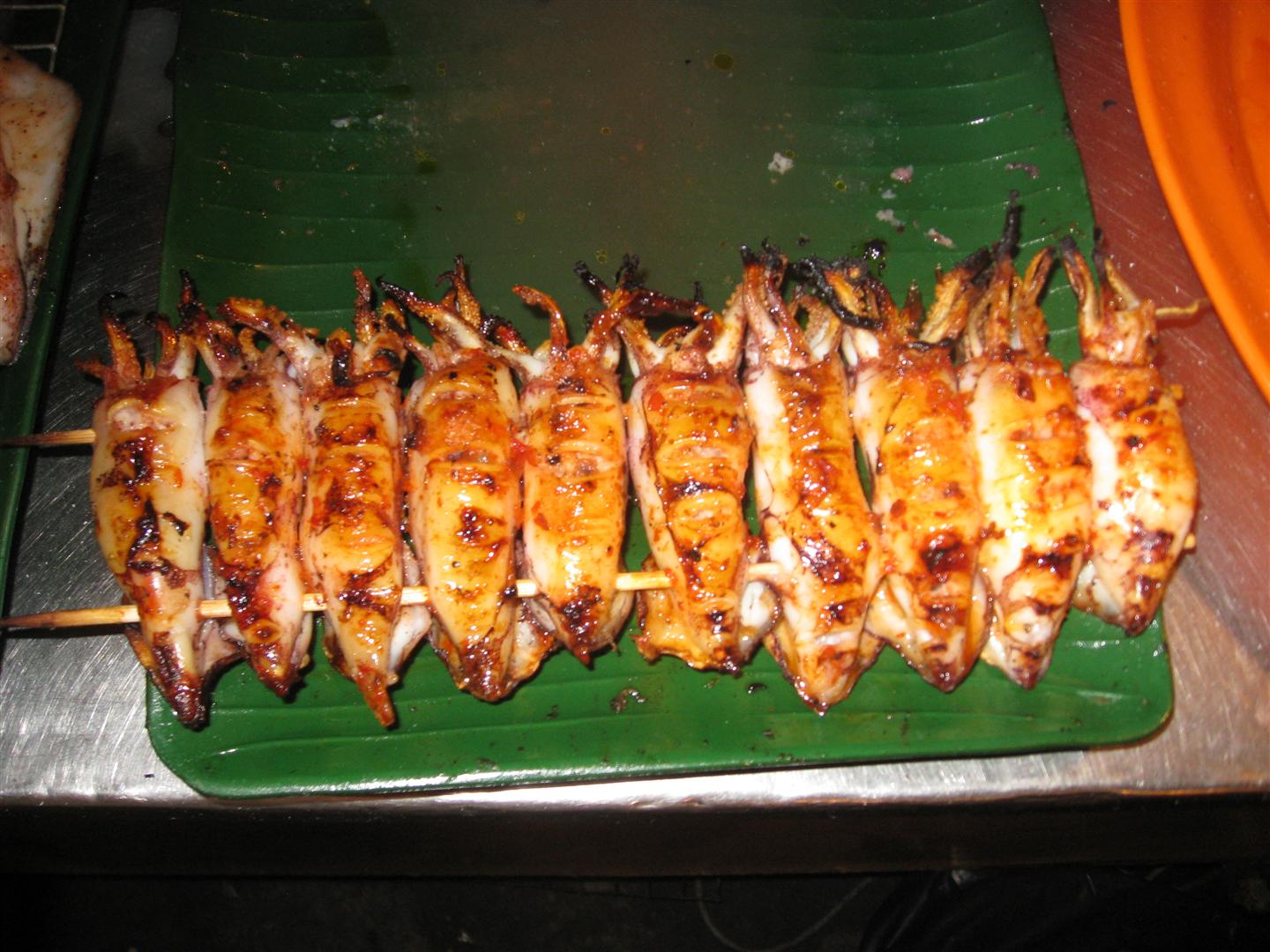
The amazing night food markets at Kota Kinabalu
Fishing boats - Kota Kinabalu harbour
Sylvia, holding dinner - Seafood Restaurant, Sandakan
Stilt houses, Sandakan
Kinabatangan River, dusk
Swastika (lucky symbol) at Bhuddist temple, Sandakan
Proboscus monkey, Kinabatangan River

'See no evil ......'
Palm oil seeds
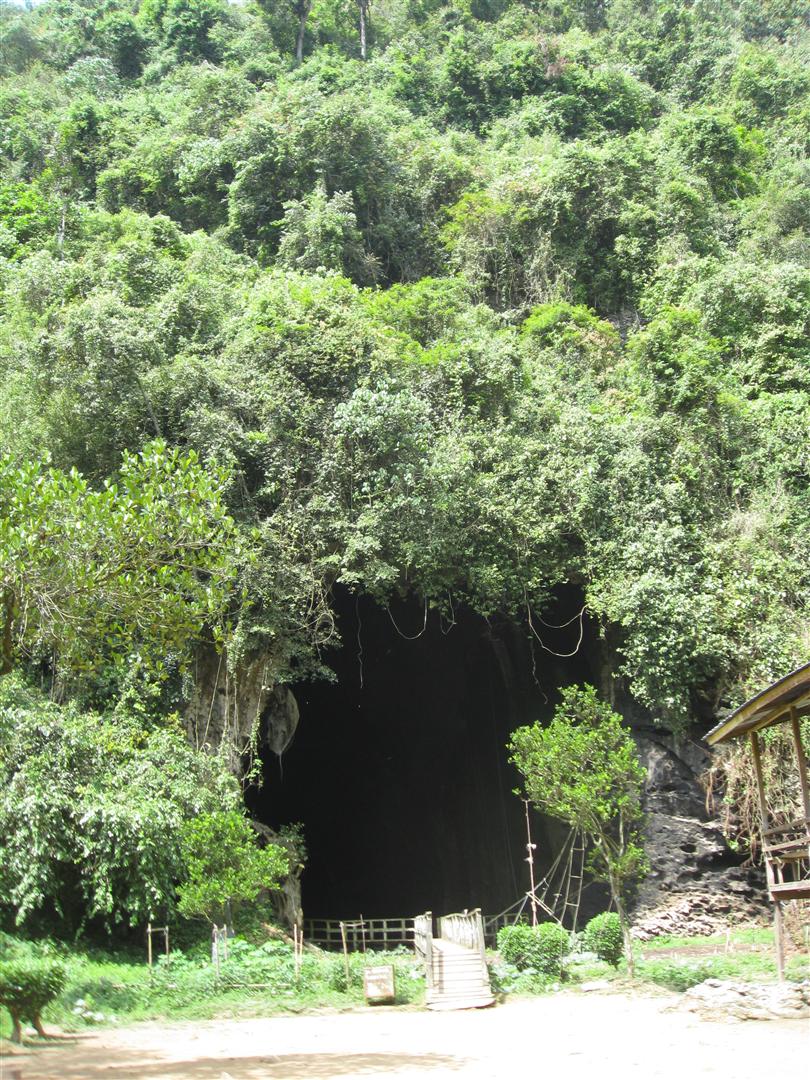
Gomantong Caves - one of the caves used for birds nest (swifts) harvesting used in soup. We were lucky enough to visit during the twice-yearly harvesting. The cave is home to many creatures - bats, millions of cockroaches, and lots of other creepy things. The smell is something else. But to see the harvesters climbing up spindly ladders to great heights in the cave is pretty amazing.


Because the birds nests are such a valuable commodity (a tender system is used to grant licences), guards must sleep in the cave each night. And this is where they sleep - doesn't even bear thinking about. The roof over the hammocks is a definite necessity. Let me say that I now know what it's like to be shat on from a great height ....


8 Mar 2010

Limoux and Snow

Sunday in Limoux for one of the many days of the Fécos, the weather was amazingly fine and sunny.

And yesterday in Bize we were snowed in! Not just Bize – most of the south of France. Very strange indeed for this time of year. It was mentioned on the official weather site that a snowfall like this, this late in the year, has not occurred since 1964.

So, a pictorial record of both events ….

I planted a whole lot of plants on the weekend, thinking spring had arrived - now I must wait to see
if they'll survive after the thaw!

Olive tree, looking decidedly unhappy under its weight of snow
..... and the wattle (mimosa) looking even unhappier,
more resembling those 'leaning trees of Geraldton'.
The day before, it was vertical and covered in blossom!

______________________________

LIMOUX

No-one / nothing goes home without a covering of confetti ......


A very good article is reproduced below. It’s from The Aude Flyer, and gives a good description of the origins and history of the Limoux Carnival.

The Limoux Carnival is not a manufactured event meant as entertainment for tourists. It is deeply traditional and taken very seriously by the people of the town, masked players and spectators alike.

The tradition of the Carnaval de Limoux has been handed down from generation to generation and is now part of the heritage of the town and has the distinction of being the longest carnival in the world.

It takes place each winter from January until Easter and is conducted in Occitan, the traditional language of the area. It is highly individual and great fun to attend.

Be prepared to let your hair down and be covered in confetti and you won't be disappointed.


No one can say exactly when the carnival started in Limoux. Some historians say that it was originally a pagan winter festival.

Others say that the festival started in the 14th century when the monks of the monastery of Prouille awarded the millers a day of remission of their taxes, and so to celebrate they ran through the streets of the town (accompanied by the town fiddlers), throwing flour over everyone.

The flour has been replaced by showers of confetti in the modern Carnival.

The earliest written record of the event seems to be a regulation of 1604. At some stage in its 400 year history it has been partially merged with the Christian Lent festival, and with European pierrot traditions.

Women have been allowed to participate since 1972!


In Occitan the Carnival is referred to as Fècos after the characteristic dance of the festival. The Fècos takes place in the place de la Republique, a wide square with ancient tall timber framed buildings with stone arcades on all sides.

The masked dancers (looking like scary characters from Dr Who) process around the square under the arcades from one bar to another accompanied by local musicians.

Uniquely the Limoux Carnival requires revelers and spectators to participate equally to the event. The spectators become the partners of the revelers, as they are exchanging jokes and gossip in the Occitan language.


The Carnival takes place on ten consecutive Saturdays and Sundays culminating in a ceremonial bonfire.

There are some twenty or so local groups referred to as "les bandes" who take it in turns at 11 in the morning, 4.30 in the afternoon and 10 o'clock in the evening to perform their ritual dance in the main square.

The people in a particular bande may be members of a town guild, a local business or maybe just live in a particular part of Limoux. Gaining entry to a bande is quite difficult and the decision of the bande to accept a new member has to be a unanimous decision.


The Carnival starts with a parade of the members of the organising committee dressed up in comic masks, white baggy shirts and trousers, wearing red scarves and clogs, and carrying whips. These Meuniers (Millars) receive His Majesty, the King of the Carnival, "Sa Majesté Carnaval" a dummy stuffed with straw, who will preside over the proceedings.

The performances "les sorties" begin with three members of the bande leading their particular group in a procession to one of the five cafes in the square. Here, in front of the chosen café, they dance a waltz. Accompanying them is a group of musicians on drums, trombones, clarinets and trumpets.

The sound they make is reminiscent of the French bands at the Rugby World Cup matches.


Following behind the bande are a group of performers called "goudils". Goudils are men, women and children, fans you could say, connected possibly in some way to the bandes; but not necessarily. In fact, anyone can dress up and follow the music, and the more ridiculous the disguise the better.

The popularity of the bande may be judged by how many goudils it has. This strange collection of disguised performers processes around the square in time to the music, stopping in turn at each of the cafés to drink wine and make good natured fun of the customers.


The first sortie is at 11 o'clock in the morning and the comments and characters have a political theme and it is the purpose of the carnival to ridicule society and its rules.

The subject is chosen by the bande that is responsible for "starting the music" on that particular day. The goudils of the bande are the featured performers at the morning sortie; they are rowdy and risqué carrying banners and often wearing plastic bosoms and bottoms!


The whole demeanor of the 4.30 afternoon performances is a little more mellow. No mention of politics and the music is slower. The bande's Pierrots arrive wearing white masks, waving their long wands known as "carabenas" and showering unsuspecting passers-by with confetti.

The men and women are dressed identically in spectacular clown outfits with enormous ruffs, their faces and hands are covered to avoid recognition when they are winding up the spectators with personal comments and innuendos.


At 10 o'clock in the evening the Pierrots come back to the square. The medieval setting of the square is made to look quite mysterious by the appearance of torch carriers to light the way of the procession.


After ten weeks of festivities, the Carnival king is brought to trial as the scapegoat who must take the blame for all the 'sins' committed during carnival and although he is rigorously defended, he is inevitably found guilty and burnt at the stake in a huge fire in the square.

All the Carnival participants are present and mourn their king and throw their long wands on to the fire closing the Carnival until next year!

22 Feb 2010

Bize: Carnaval 2010


And it’s that time of year again. This year, I’ve been a little more involved, in that I’ve been helping with making of the paper flowers for the float!

Every Wednesday afternoon, a group of us got together and with the help of nifty home-made contraptions of wood and wire, assembled thousands of paper mâché flowers.


The men were in charge of constructing and decorating the float in Jacque’s barn, and periodically called by to collect the plastic bags full of flowers.

Bonnie and I also spent several afternoons at my place, sewing like crazy, getting our costumes ready.

Bonnie brought her sewing machine and was well in control of that side of things. I was pretty much on the end of the iron and a bit of hand stitching! I’m not so good with a needle and thread, so let’s just say parts of my costume were pretty rough – dare I say even done up in places with the odd safety pin …..


This year, our group’s theme was the traditional costumes of some of the regions of France. I got to be ‘La Normande’ – from Normandy. One of the women’s daughters used to be an avid collector of costumed dolls, and she has kept them. So out came a huge box of dolls in various costumes, and this was my remit.
And despite my best efforts to replicate the outfit, this is the finished product. Thank goodness for masks and big hats, I say. Not everyone knew it was me!
And a few more photos of the parade:


Indigo and Elisa

Our float - showing departments of France
the result of our paper-flower-making.....
Bird flu / H1N1 theme ....
Terry and Bonnie
(from the Savoy department - a 'grand' dame and chimney sweep!)
Bob the Builder aka Miki
Some local residents, with the best view of the parade
Terry and Jacques
____________________________________________________

The week before the Carnival was the Maire’s annual lunch in the village. As always, a damn fine meal, followed by an afternoon of entertainment.

Actually, I didn’t do so well with the starter. I’m a bit of a wimp and haven’t yet developed a taste for foie gras or gesiers (duck gizzards) and that’s what came served on a bed of green salad. The gesiers were freshly fried up and served warm, and there were generous slices of foie gras on grilled bread. Everybody else enjoyed the dish, so it was me missing out ….. but I just can’t bring myself to eat them.


However I thoroughly enjoyed the rest of the meal, the company, and the afternoon’s show ...

11 Feb 2010

At last .... snow!


Finally, some snow has fallen in Bize!

When the rest of Europe nearly ground to a halt over the New Year with the severe weather, and villages all around Bize had at least some snow, we had only a few flurries which melted on hitting the ground.


But this morning, I woke to find lots of snow swirling around the courtyard. And a walk around the village later - a veritable winter wonderland!

Magic ……


_____________________________________

And nothing to do with snow, but a few snippets here of this January’s Pig Fair at Puicheric…… the annual pig crying competition and kid/piglet racing!
Resting before the big race .....

Moving sideways

Future posts on Bize-Bytes can now be found on Facebook. Link: https://www.facebook.com/pages/Bize-Bytes/895137113876897